Tech Diplomacy News: AI takes center stage at the UN General Assembly
AI Takes Center Stage at the UN General Assembly
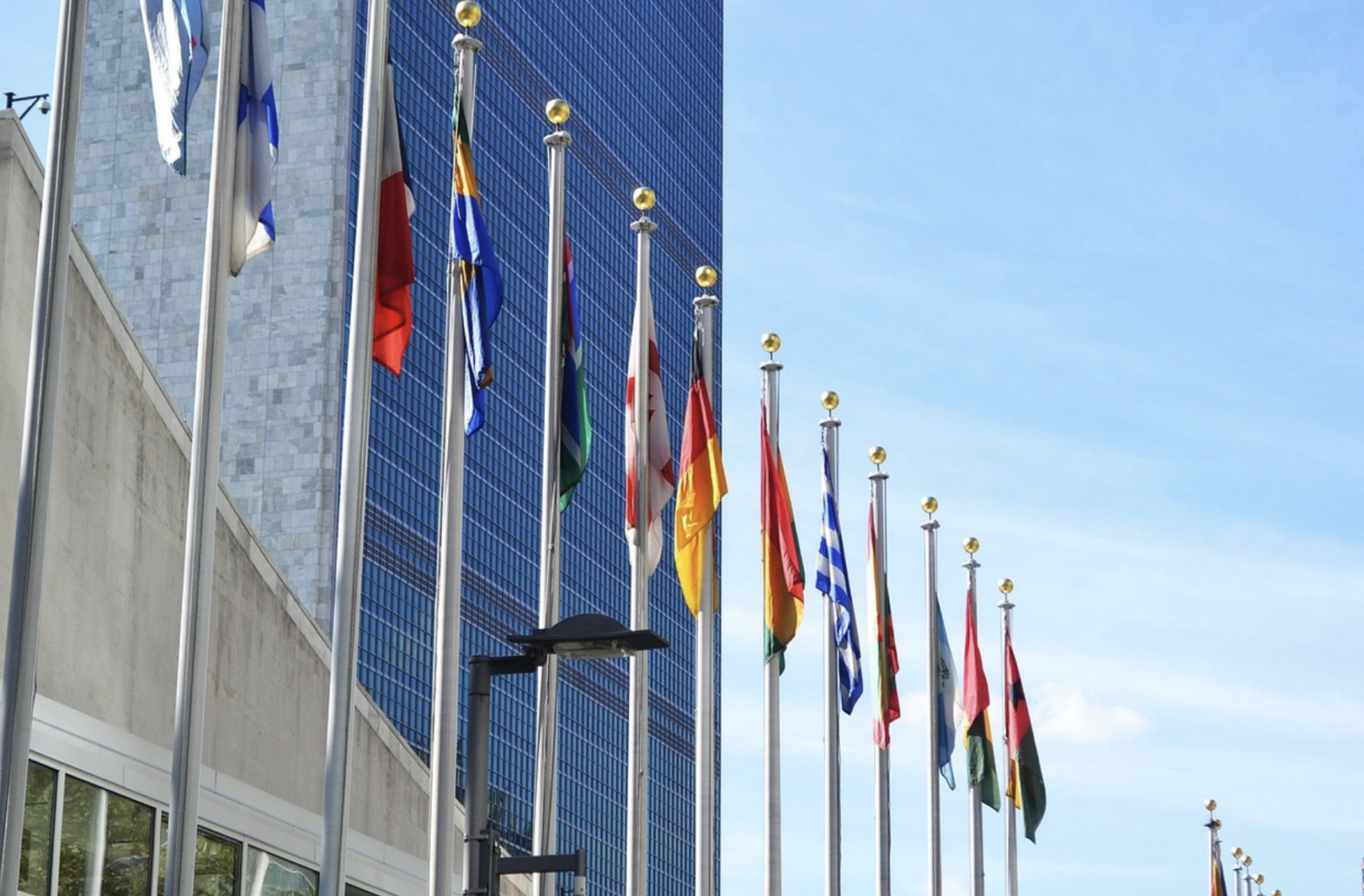
This week, the high-level General Debate of the UN General Assembly started, with global leaders arriving to New York City to discuss the world’s most pressing challenges. This year, and “for the first time at the world body, the threat posed by artificial intelligence has jumped to the top of the agenda.”
Yesterday, in his final General Assembly speech before stepping down after a decade as UN Secretary-General, António Guterres urged nations to build shared oversight of AI, telling delegates that “those countries leading this technological revolution must share information on emerging safety risks, cooperate on testing and evaluation.” Guterres also pushed for reform of what he characterized as institutions still shaped by “the power realities and interests of a largely bygone age.”
Today, the heads of major AI companies urged the UN Security Council to establish safeguards on the technology, urging that without proper oversight, AI’s growing power could threaten humanity itself. Anthropic CEO Dario Amodei told the Council that “if managed poorly, I even believe AI could be a risk to humanity as a whole,” while OpenAI’s Sam Altman warned, “we could lose control of the future to AI.” Both executives pushed for international controls, and stressed AI’s power must be distributed instead of concentrated.
Stay tuned for next month’s newsletter to read more coverage of the role AI is playing in discussions at the General Assembly.
Her Excellency Deemah AlYahya Reflects on Receiving the Tech Diplomacy Award
Congratulations to Her Excellency Deemah AlYahya, the distinguished recipient of this year’s Tech Diplomacy Award, who received her award in person this week. We’re grateful for her thoughtful words on what this recognition means to her:
Last March, I was supposed to be here in California to receive the Tech Diplomacy Award in person.

Global
When U.S. President Donald Trump and Chinese President Xi Jinping meet this week, AI security is likely to be a topic of focus, with officials from the respective nations “spooked by the increasing cyber capabilities of AI models,” says director of the Wadhwani AI Center at the Center for Strategic and International Studies, Aalok Mehta. However, experts see a genuine slowdown agreement as unlikely given their rivalry, Kai Nicol-Schwarz reports for CNBC.
The G20 Innovation Ministerial wrapped up in North Carolina earlier this month, with member nations reaching consensus on a joint statement built around six shared priorities, ranging from workforce development to AI standards and IP protections for AI. The two-day summit saw officials sit down with tech leaders like Elon Musk, Mark Zuckerberg, and Sam Altman, and concluded with initiatives like the AI Prosperity Compact meant to expand technical training and private-sector partnerships across member nations.
A new OECD report on lithium and nickel supply chains argues better traceability could help stabilize investment in critical minerals, an increasingly strategic sector for areas like defense and tech that’s currently seeing weaker-than-expected funding due to operational and governance risks.
Delegates at the ITU’s World Telecommunication/ICT Policy Forum in Nassau adopted five non-binding Opinions earlier this month, meant to guide global digital policy ahead of the agency’s Plenipotentiary Conference this November, covering areas like digital divides, environmental sustainability, infrastructure resilience, space connectivity, and innovation ecosystems.
Read the August global digital policy roundup from Tech Policy Press here.
North America
Canada and Germany announced joint funding of 150 million CAD and 100 million EUR for LawZero, a Montréal-based nonprofit developing a “Scientist AI” model designed to reason transparently using evidence rather than pursuing autonomous goals of its own. Canada’s Minister of AI and Digital Innovation Evan Solomon tied the investment to national interest, saying it will help ensure “the next generation of AI is built safely, responsibly and on Canadian terms,” with the project expected to create hundreds of jobs and establish dedicated computing infrastructure.
The elaborate welcome Trump has planned for Xi Jinping’s first Washington state visit in over a decade reflects a broader shift in the U.S.-China relationship, with Beijing increasingly confident that its rare-earth export leverage has forced Washington into a more accommodating position. Several unresolved areas persist heading into the summit, including a tariff truce set to expire November 10th and a newly agreed AI dialogue whose substance remains uncertain. Tensions are also rising over accusations that Chinese firms have been systematically distilling American AI models, alongside separate concerns about China’s alleged role supplying satellite imagery used against U.S. assets amid the Iran conflict.
Texas has become the first state to join a new federal pilot called Project Watershed 250, which offers free cybersecurity and AI tools to under-resourced water utilities. Governor Greg Abbott framed the initiative as urgent given the scale of the threat, pointing to a recent Iranian-backed cyberattack that struck over two dozen water utilities across a dozen states. However, critics are skeptical that the program lacks real funding behind it and effectively shifts the cost of securing water infrastructure onto private industry.
This week, California Governor Gavin Newsom signed seven bills giving local communities greater control over data centers’ use of electricity, land, and water, requiring tech companies to cover costs like grid upgrades and undergo stricter environmental review under state law. Newsom framed the measures as a counterweight to federal deregulation, arguing “we don’t have to sell out Californians or sacrifice our well-being to innovate and succeed,” while critics warn the added rules could push investment and jobs to other states and argue data centers are being unfairly singled out compared to other energy-intensive industries. The move follows Trump’s December 2025 executive order fast-tracking federal data center permitting to boost AI infrastructure, Carlos E. Castañeda writes for CBS News.
Canadian province Alberta is leaning heavily on Meta’s 13 billion CAD Sturgeon County data center as proof its energy sector can support a broader AI economy, with Meta claiming the facility’s closed-loop cooling system will use minimal water once operational and pledging tens of millions toward community infrastructure and watershed restoration.
After the major crypto market structure bill, the Clarity Act, stalled in the U.S. Senate, federal regulators moved quickly to fill the gap using existing authority, with the Securities and Exchange Commission opening a temporary pathway for trading tokenized stocks and the United States Commodity Futures Trading Commission submitting a separate crypto rulemaking proposal for White House review just two days later. Blockchain Association CEO Summer Mersinger believes “having the regulators provide some sort of certainty is going to really open up the industry to more investment, more integration into traditional finance, and really grow the sector,” while Coinbase CEO Brian Armstrong noted that “at this point, I don’t think we can wait on Congress and the Senate.” A bipartisan coalition of state attorneys general pushed back against the bill, warning it would strip states of their power to protect citizens from scammers, Talia Kaplan reports for CNBC.
A recent CSIS report argues that export controls, which are now central to U.S.-China tech competition in semiconductors and AI, operate in a fundamentally different landscape than Cold War-era restrictions did now that China is deeply woven into global supply chains and has substantial innovation capacity of its own. The authors find that while these controls can delay Chinese access to critical technologies, overly broad or constantly shifting restrictions risk backfiring and cutting into revenue for American firms, pushing companies to design products that avoid U.S. technology altogether and making it harder to stay coordinated with allies.
Africa
Civil rights groups in South Africa are pushing back against expanding American-owned data centers, filing a legal challenge in August over two facilities proposed by California-based Equinix in Cape Town and calling for a nationwide moratorium. The stakes are high given projections that Africa’s compute demand may grow roughly fivefold by 2030, with Equinix’s proposed 174-megawatt Cape Town facilities alone expected to consume more water annually than 18k homes: “our members know what it is to queue for water, to go without electricity, and to wait decades for decent housing. Now a massive data center is trying to jump the queue and take our land, water and energy,” chairperson of social movement Housing Assembly, Kashiefa Achmat, shared with Danai Nesta Kupemba for Rest of World.
The U.S. Export-Import Bank approved a 99.6 million USD loan to Africell, the only American-owned mobile network operator in Africa, to fund network upgrades in Angola using U.S. and European technology, with backers framing the telecom expansion as a way to diversify Angola’s tech sources and strengthen its resilience against cyber threats.
She Code Africa celebrated a decade of expanding tech access for African women with a Lagos summit on September 19, drawing over 500 women in tech and industry leaders under the theme “A Decade of Impact: African Women Architecting the Digital Future. Since launching in 2016, the nonprofit says it has reached more than 65k women through its programs and now counts over 50k community members across 20+ African countries, offering digital literacy training, mentorship, and career development. Founder Ada Nduka Oyom framed the milestone as a launchpad rather than a finish line, saying “the work is far from finished” and that what excites her most is “the opportunity to bring women together again and create the kinds of connections that can change what happens next,” Arinola Moses writes for Technext.
Botswana Tech Fund 1 reached a 6.7 million USD first close, aiming to invest in digital businesses supporting small and medium-sized enterprises across Southern Africa. The fund combines an accelerator-led pre-seed track with growth-stage investment, and is being advised by pan-African venture firm Launch Africa Ventures, with backing from Pula Investments. Organizers hope the fund can help narrow the investment gap between Southern Africa’s smaller markets and established tech hubs like South Africa, Nigeria, and Kenya.
As drought conditions worsen across Africa, experts believe technology could play a crucial role in addressing this pressing issue, though scaling to smallholder farms remains a major challenge. Around 95% of sub-Saharan African farmers still rely solely on rainfall rather than irrigation, and expanding solar-powered irrigation can more than double crop yields. Not everyone agrees, though, with non-profit AGRA’s director of climate sustainable productivity and resilience, Tilahun Amede, pushing back against the idea of a tech “miracle” and noting the importance of ensuring existing tools reach farmers “in the right combination at the right time and the right quality,” Ben Payton writes for African Business.
A recent Global Witness investigation found that conflict coltan smuggled from M23-occupied mines in eastern DRC, which supply roughly 15% of the world’s coltan, is being bought by Rwandan exporters and likely entering the supply chains of major tech and auto companies. The group warns that surging AI-driven demand for tantalum, a metal derived from coltan used in high-performance computing, could make controlling these mines even more lucrative for armed groups.
Asia
Nvidia’s push to release a free, next-generation AI model could deepen the UAE’s tilt toward Washington, since the nation’s flagship data center already runs on 400k of the U.S.-based company’s chips. Analyst Mohammed Soliman of the Middle East Institute argues the model layer was “the last missing piece” in Nvidia’s dominance, explaining that the company “already owns the chips” and “is now scaling the factory that produces the models that run on those chips,” Indranil Ghosh reports for Rest of World.
Equipment supplier Applied Materials announced a 5 billion USD, decade-long investment in India at SEMICON India last week, the country’s flagship chip conference, which drew over 600 companies and representatives from 52 countries this year. Prime Minister Narendra Modi positioned India as a “trusted partner” for chipmakers looking to diversify away from Taiwan and China, saying “the world stands in utmost need of new and reliable manufacturing locations,” and government estimates project domestic semiconductor consumption could more than double to 110 billion USD by 2030. However, while three chip-packaging plants have begun production, India’s most high-profile fabrication project, a 10 billion USD Tata Electronics facility in Gujarat, has been delayed by nearly two years and has not produced any chips as of yet, Munsif Vengattil writes for Reuters.
Speaking of India, two new digital platforms aimed at improving climate accountability were unveiled by Minister of State for Environment Kirti Vardhan Singh last Wednesday in Mumbai. The Net Zero Portal lets companies and organizations voluntarily register emissions data and net-zero targets, and the National Action Plan on Climate Change Dashboard gives government ministries a centralized way to track implementation and coordinate climate policy across departments.
Taiwan’s diplomatic strategy has shifted from decades of dollar diplomacy to tech diplomacy, with the nation leveraging dominance in semiconductor manufacturing to build influence with more powerful countries after losing the ability to compete financially with Beijing. Mina Chen explores this transformation in this piece for the Global Taiwan Brief.
South Korea overhauled its espionage law this weekend, expanding the legal definition only encompassing spying on behalf of North Korea to covering technology theft benefiting any foreign nation, with penalties now reaching up to 30 years in prison. Though China isn’t named directly in the legislation, it accounted for half of all detected tech-leak cases last year, and Industry Minister Kim Jung-kwan has described growing urgency around the pace of China’s advancement as “beyond imagination.” The stakes are underscored by an ongoing case in which ten former Samsung employees stand accused of leaking manufacturing to a Chinese riva, allegedly costing the South Korea-based multinational an estimated 3.7 billion USD in lost sales in 2024.
In this BBC Asia Pacific episode, host Mariko Oi talks with freelance journalist Isaac Chong and AI strategist Bernard Leong about why Malaysia has become one of Southeast Asia’s leading hubs for the data center boom. The conversation digs into what these facilities do and why they’re being built at such a rapid pace globally, while also addressing the growing backlash from local communities over the massive electricity and water demands such projects require.
A tribe in the Philippines is facing possible displacement from their ancestral lands after the Philippines joined Pax Silica, a U.S.-led initiative aimed at building semiconductor and rare-earth supply chains outside China. In July, the roughly 1k-member tribe received a letter warning their land “could affect your occupied lands,” with government officials telling them to relocate by December for an offered rate of around 0.48 USD per square meter, which the tribes’ leader says they unanimously rejected. The government projects the broader initiative could draw up to 70 billion USD in investment and create roughly 190k jobs, but critics like political economist Calixto Chikiamco argue officials have done “a terrible job” explaining the tradeoffs.
Europe
The European Commission introduced new sustainability labels for large data centers this week, requiring facilities over 500 kW to disclose their energy and water consumption, though binding minimum efficiency standards won’t arrive until 2027. The push comes as the EU tries to triple its data center capacity by 2035 while grappling with surging electricity demand, though a Commission official acknowledged compliance with mandatory reporting rules has been slow. Critics like Corporate Europe Observatory’s Bram Vranken posit Microsoft’s lobbying has already shaped the rules in ways that undermine transparency, warning a confidentiality clause means “much of the information in the label will be impossible to check,” while the Commission weighs longer-term ideas like letting data centers supply waste heat to millions of European homes, Marta Pacheco writes for Euronews.
The Commission also unveiled the EU Kids Act this month, proposing a tiered approach to restricting children’s social media use across the bloc by banning under-13s entirely and limiting 13-to-15-year-olds to one hour a day through parent-managed “mini accounts,” Amy Walker and Nick Beake report for the BBC. Commission President Ursula von der Leyen framed the plan as putting “parents back in the driving seat,” warning that “too many children are being exposed too early to an online world they are not ready to navigate,” while stressing that platforms would still need to prove their services are “safety by design,” avoiding “toxic or addictive features” for anyone under 18, or face fines up to 6% of global revenue. The rules would apply to apps like TikTok and Instagram, YouTube, AI chatbots, and online games, and would legally override national laws.
U.K. Prime Minister Andy Burnham announced at the UN General Assembly this week that a National Centre for Information Defence will be established to detect and disrupt AI-enabled disinformation campaigns from hostile states. Burnham accused Russia of spending roughly 1.3 billion GBP annually on information manipulation, alleging the Kremlin has used “bots and fake websites, falsified newspaper articles, forged the branding of 28 British organisations, including universities and the BBC,” while warning that AI will “multiply” existing disinformation threats and positioning the UK as an “honest broker” in shaping global AI safety standards. Alongside the announcement, Burnham unveiled a new bilateral AI and autonomy partnership with the U.S. focused on protecting critical infrastructure, the Digital Watch Observatory reports.
Last week, Ukrainian President Zelenskyy announced a jet-powered Russian Shahed drone was shot down for the first time using a homemade interceptor, though he noted the technology still needs fine-tuning. The Shaheds fly over 400 km/h, twice as fast as the older propeller versions, and Ukraine has been struggling to keep up. More than 60 Ukrainian companies are now working on solutions, though only a few have seen results so far.
A recent report from interface examines Germany’s roughly 117k-strong AI workforce, which is the largest in the EU, and finds it split between large southern industrial states like Bavaria and Baden-Württemberg and city-states like Berlin. Germany’s AI talent generally aligns with its declared strategic priorities in areas like manufacturing and robotics, but healthcare represents a major gap, employing just 3.5k AI professionals despite being officially designated a national priority in a nation with an aging population and looming nursing shortage. The report also warns a struggle to retain international talent, with documented outflows to Switzerland, the U.K., and the US.
Ireland’s Data Protection Commission fined Google over 403 million EUR for mishandling users’ location data across features like web activity tracking and location history, wrapping up an inquiry that first began in 2020. The investigation found the U.S.-based tech multinational retained location data longer than necessary, but Google says the case concerns old policies that have since been addressed. The regulator has given the company six months to fix its current data processing practices, the first time Ireland’s DPC has penalized Google despite previously fining other tech firms and platforms like Meta and TikTok.
Norway aims to have a development plan in place by 2028 for the Fen Complex, believed to be Europe’s largest known rare-earth deposit and holding an estimated 15.9 million tonnes of oxides used in EV motors and defense equipment. The project has faced years of delay over environmental concerns, and Europe currently has no active rare-earth mines and remains heavily dependent on China for supply.
Latin America
Praxis, a crypto-backed “digital nation” that’s spent years searching globally for a place to build a physical city, has signed a largely nonbinding deal to establish its community within +Colonia, a separate smart-city development already under construction in Uruguay. The project fits into a broader Silicon Valley trend of online communities that raise money to eventually acquire physical territory and self-govern, though skeptics note such efforts have historically struggled to materialize despite big ambitions and substantial funding. +Colonia’s developer, Eduardo Bastitta, an adviser to Argentine President Javier Milei, said he’s already secured hundreds of millions for the broader development, Emma Bubola reports for The New York Times.
Mexican authorities uncovered a cryptocurrency mining operation in Tlaola, Puebla, after discovering hundreds of computers illegally drawing power from a federal hydroelectric dam. State security chief Francisco Sánchez noted authorities had been tracking reports of suspicious activity near the Nuevo Necaxa dam given “there was a very large power connection,” and investigators working alongside Mexico’s federal electricity commission, the Attorney General’s Office, and the Navy, are now examining whether the operation was also being used for money laundering, Eyanir Chinea reports for El País.
Meta announced it’s testing Community Notes, a user-driven content-labeling system, across 16 Latin American countries, ultimately replacing professional fact-checking as a way to indicate misleading information. Experts warn the shift could lead to increasing the spread of misinformation and that the system should supplement, rather than replace, professional verification, particularly when it comes to coordinated and sophisticated forms of disinformation.
Spain and Mexico have signed a memorandum of understanding expanding cooperation across AI, supercomputing, cybersecurity, digital skills, and the use of digital tools for climate and disaster management. An accompanying action plan will guide implementation through joint programs and shared training initiatives, with both countries also exploring deeper links between their supercomputing ecosystems and cooperation on sustainable data center development.
Last month, Brazil’s data protection authority fined TikTok owner ByteDance 29.8 million USD for mishandling children’s personal data, marking the first financial penalty the regulator has issued against a social media company. Investigators found the platform’s safeguards were inadequate for both registered accounts and its “logged-out” viewing feature, estimating data from at least 8 million minors may have been improperly processed due to weak age verification. TikTok maintains the violations stem from years-old practices and don’t reflect changes since implemented, while regulators have ordered a broader compliance overhaul requiring stricter default privacy settings for under-16 users and new limits on the logged-out feed, including a 12-hour usage cap and a ban on interactive features like commenting or following accounts.
Chile, Argentina, Peru, and Bolivia have signed a joint declaration to coordinate as a regional bloc on strategic minerals rather than competing separately for mining investment, aiming to position the Southern Cone as a reliable long-term partner in global critical minerals supply.
Oceania
Papua New Guinea and other Pacific nations will gain access to new AI governance and risk-management tools through an initiative backed by Australia, including technical guidance that will help governments assess AI’s opportunities and risks while encouraging safe and ethical adoption tailored to the Pacific context. The initiative fits into Australia’s broader engagement with Pacific governments on cybersecurity and digital policy through its Department of Foreign Affairs and Trade.
New Zealand’s National Cyber Security Centre found 43% of small and medium businesses now believe they’re vulnerable to cyberattacks, up from 34% last year, with vulnerability climbing even higher among larger SMEs. 76% of businesses in the medium size range reported a cyber threat in the past six months, nearly a quarter of whom described the impact as moderate to severe. Despite the rising threat, nearly a third of SMEs in the country still do not conduct staff cybersecurity training.
The U.S. is objecting to Australia’s proposed digital duty of care laws, which would require tech companies to let users opt out of social media algorithms or face significant fines, arguing in a “rare submission to the proposed laws” that the plan amounts to “censorship of protected speech.” Prime Minister Anthony Albanese, speaking from New York during his UN General Assembly trip, pushed back on claims of government overreach, insisting the law is “about giving people back control over what they receive on their devices” rather than expanding government authority, Lana Lam writes for the BBC.
Samoa’s Ministry of Communications & Information Technology held a two-day workshop this month to lay the groundwork for the country’s Digital Public Infrastructure, characterized as the digital backbone that will underpin everyday government and financial services. The framework is based on a digital identity system, interoperable digital payments, and secure data-sharing aimed at eliminating redundant paperwork across agencies. Participants used the sessions to assess Samoa’s current digital readiness, identify priorities, and begin shaping an action plan for part of what the Ministry frames as a broader push toward more secure, inclusive digital services for citizens.
During the Pacific Islands Forum Leaders’ Plenary Meeting this month, Tonga pushed for the region to take a more active role in shaping global tech and governance norms, including “strengthening resilience, diversifying dependencies and building partnerships grounded in respect, mutual benefit and sovereign equality,” the Prime Minister’s office shared following the event.
News Corp Australasia executive chairman Michael Miller warned that unchecked AI is rapidly eroding public trust in truth, framing the issue as fundamentally about copyright in insisting AI companies mine “research papers, media sites, proprietary databases, and original creative work” from Australians “without consent, without recognition, and without paying a cent,” and calling on the government to stay firm on enforcement, Lillian Saleh writes for news.com.au.