
Tech Diplomacy News: AI in focus on the global stage
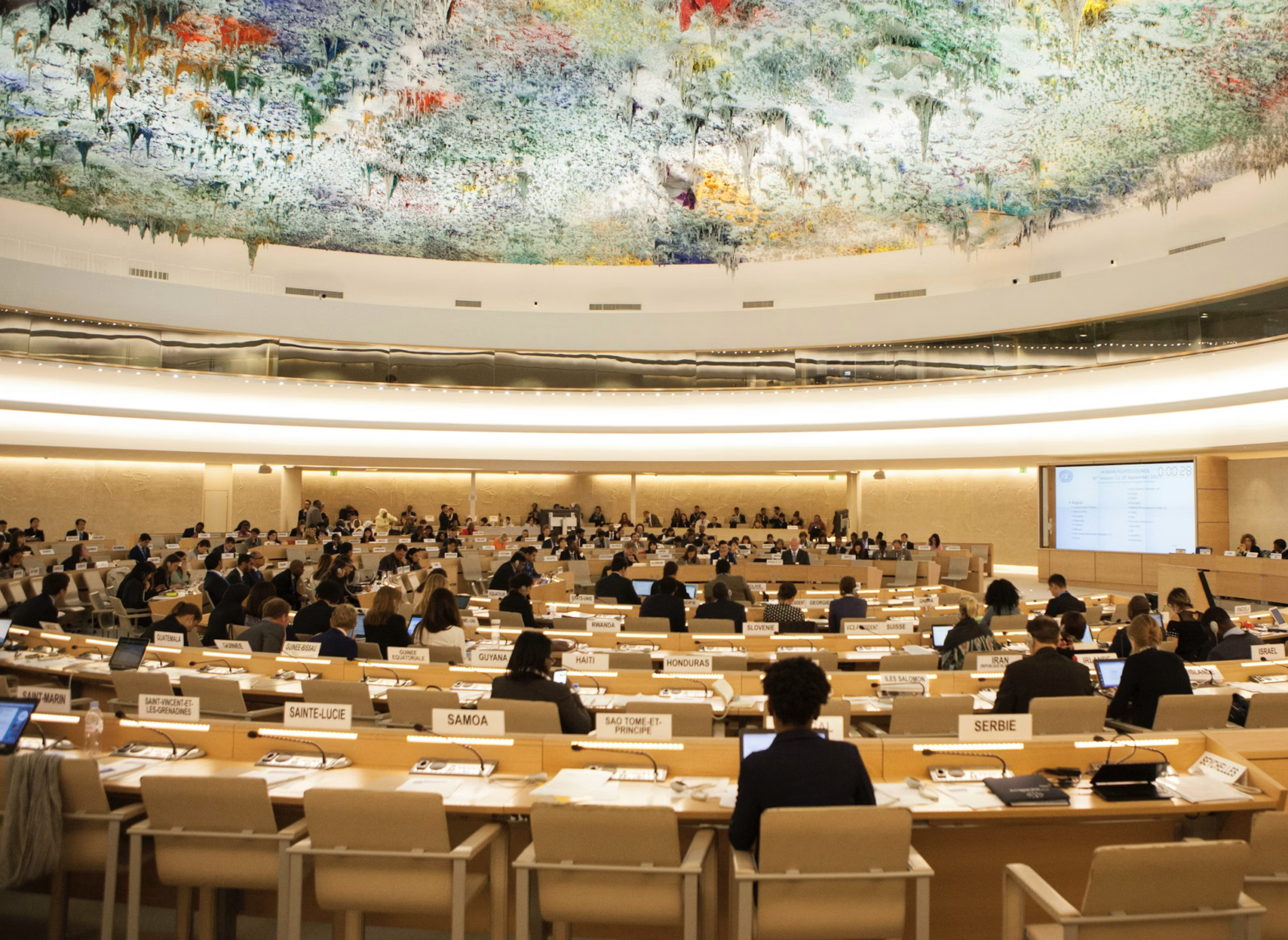
| News Roundup Global Geneva will host the UN’s first Global Dialogue on AI Governance in July, with organizers now seeking government and stakeholder representatives to facilitate discussions on topics including AI’s societal impacts, capacity-building, trustworthy systems, and human rights. The convergence of AI with cybersecurity has become central to global security in 2026, with security teams largely viewing AI as worsening cyber threats. The global nature of AI-driven cybersecurity challenges demands coordinated responses through strengthening governance of AI systems, fostering public-private partnerships, and advancing inclusive global dialogues on responsible AI use in cyberspace, Nimra Khalil writes for Eurasia Review. Big tech companies are now spending more on AI infrastructure than the world spends on oil and gas exploration. The International Energy Agency proposes proactive management of data center project pipelines, approaches promoting electricity system flexibility to accelerate grid connections, and removing barriers to AI adoption in the energy sector to enhance energy security and sustainability in its recent report. AI governance has moved from a technical matter to a central diplomatic priority as countries recognize no single nation can regulate AI systems that operate across borders. Key barriers include uneven AI readiness across regions and the need for sustained institutional commitment beyond electoral cycles. Read the April global digital policy roundup from Tech Policy Press here. North America On May 5, Common Sense Media launched an independent lab to evaluate whether AI tools used by young people are safe and age-appropriate, bringing testing capacity to address a landscape where over half of American teens now regularly use AI chatbots and nearly a third find those conversations as satisfying as talking to real friends. The Youth AI Safety Institute will establish standards using a model similar to vehicle crash-test ratings, with funding from philanthropic sources and major AI companies, though the institute maintains editorial independence. Former U.S. Surgeon General Vivek Murthy, who serves as liaison to the institute’s advisory board, warned that “we are at great risk of making the same mistakes with AI that we made with social media: subjecting children to new technologies without adequate safety guardrails and thereby causing harm to countless lives.” A joint advisory from U.S. agencies warns that cyberattacks targeting critical infrastructure have escalated, with hackers causing operational disruption and financial loss across energy, water, and local government systems. The World Economic Forum’s Global Cybersecurity Outlook 2026 found that most organizations now treat global political conflicts as their top cybersecurity concern, identifying geopolitics as a leading factor influencing cyber risk mitigation strategies. The Trump administration is “not in a rush” to extend a tariff and critical minerals trade truce with China that ends in November, U.S. Treasury Secretary Scott Bessent said this week, noting that things are stable even though China has “been satisfactory, but not excellent” on critical minerals fulfillment. The two sides will establish a Board of Trade to identify tens of billions in products where both sides might cut duties, and U.S. and Chinese officials will likely start consulting on AI guardrails within four to eight weeks as concern grows over national security risks posed by AI systems, David Lawder reports for Reuters. A California jury unanimously dismissed Elon Musk’s lawsuit against OpenAI and Sam Altman after finding he waited too long to file his claims, with the statute of limitations having expired on accusations that Altman breached a non-profit contract by shifting toward for-profit operations after Musk donated 38 million USD. The jury deliberated for about two hours after three weeks of testimony from Musk, Altman, and Microsoft CEO Satya Nadella, with Altman testifying that Musk not only supported OpenAI becoming for-profit but wanted control himself. Musk vowed to appeal, though legal experts are doubtful of a win. Government passwords, access tokens, and cloud credentials were found to be publicly visible on GitHub after a U.S. Cybersecurity and Infrastructure Security Agency contractor employee posted them in spreadsheets, giving potential access to systems at the cybersecurity agency and its parent Department of Homeland Security. CISA says it’s investigating, but has “no indication that any sensitive data was compromised,” though the agency wouldn’t say whether it has seen evidence of unauthorized access. CISA has operated without a permanent director since January 2025 and lost roughly a third of its staff to cuts and furloughs under the Trump administration, Zack Whittaker writes for TechCrunch. Ottawa is evaluating over 160 proposals for AI data centers as Canada pushes for what officials call “sovereign” infrastructure, though questions remain about how much sovereignty is possible with equipment from U.S.-based Nvidia and digital networks that aren’t confined to borders. Privacy experts say true sovereignty is not just reliant on location, but also on Canadian ownership and governance.White House chief of staff Susie Wiles walked back National Economic Council Director Kevin Hassett’s comments about regulating frontier AI models “just like an FDA drug” after industry stakeholders warned such testing would stifle innovation, while Vice President JD Vance separately expressed alarm to AI CEOs about Anthropic’s Mythos model’s cyber capabilities. This highlights growing tension between industry-aligned advisors and officials worried about AI-fueled cyberattacks, Benjamin Guggenheim writes for The Washington Post Intelligence. The Federal Trade Commission is investigating British chip designer Arm Holdings over whether it’s illegally monopolizing parts of the semiconductor market by rejecting or downgrading licensing agreements for its chip blueprints used in central processing units. Much of the company’s revenue comes from licensing its technology to companies, including Nvidia and Apple and collecting royalty payments on design use. Online platforms in the U.S. now face federal penalties of over 50k USD per violationif they fail to remove non-consensual intimate images within 48 hours of being reported. The Take It Down Act’s compliance deadline hit this Tuesday, following a one-year grace period after President Trump signed the bipartisan legislation last year. The Federal Trade Commission sent warning letters to major platforms, including Meta, TikTok, X, Snapchat, Reddit, Discord, and dating apps, with the law covering both real photos and AI-generated deepfakes, while individuals posting such content face fines and up to two years in prison. Major tech companies Apple and Meta are fighting Canadian Bill C-22, warning the legislation could force them to weaken encryption and build backdoors into their messaging services, with Apple saying it will never comply and Meta’s policy directors calling the bill “dangerous and overbroad.” The bill is currently being debated in the House of Commons and mirrors a U.K. order last year that prompted Apple to remove encrypted cloud storage features from British users, before U.S. intelligence raised concerns and the U.K. backed down, Farwa Sajjad reports for BeEncrypted. Africa The Islamic World Educational, Scientific and Cultural Organisation and Morocco’s Ministry of Digital Transition and Administrative Reform have signed a memorandum of understanding on cooperation in digital transformation, AI, and strategic foresight, providing for workshops, training programmes, and joint seminars aimed at building capacity among public and private sector professionals. Nigeria and Germany signed a 428 million USD development and investment partnership agreement this month in Abuja, covering energy, agriculture, healthcare, skills development, and private sector growth, with the German delegation holding meetings with Nigerian and German businesses focused on power, agriculture, industrialization, and the digital economy. The agreement includes tens of millions pledged to financial and technical cooperation, Segun Adeyemi reports for Business Insider Africa. The Carnegie Africa Program launched a major update to the Africa Technology Policy Tracker that logs over 1k policies and regulations across African nations, offering a comprehensive view of how African governments are structuring their digital economies. The tracker underpins research on Africa’s digital transformation, data governance, and the intersection of technology policy with health diplomacy. Digital Africa has launched the Digital Africa Seed Fund, targeting 30 technology startups across approximately 20 countries with a preference for markets that remain structurally underserved by private venture capital, announced at the Africa Forward Summit in Nairobi. The fund is backed by Proparco, the European Commission’s DG INTPA, and the West African Development Bank, building on Digital Africa’s prior Fuzé pre-seed instrument that has previously supported dozens of early-stage companies across the continent. The fund lists six priority areas, including AI, fintech, healthtech, climate tech, space, and digital infrastructure, with emphasis on Francophone markets. South Africa controls most of the world’s platinum-group metals needed for AI chips and hosts Africa’s biggest data center market. However, its draft policy leaves critical decisions blank and sets no requirements for data sovereignty or technology transfer as the choice between Chinese infrastructure with potential surveillance risks, and U.S. closed systems with unilateral pricing, looms. Without a policy framework that demands anything in return for access to its minerals and market, choices made from here on out will set a precedent across the continent for countries with less leverage to negotiate terms, Nathan-Ross Adams writes for Tech Policy Press. Asia South Korea’s Rural Development Administration signed agreements with Uzbekistan this month to expand exports of dairy breeding technology and rice farming equipment, with the new memorandum covering joint research as part of what officials described as cooperation becoming “embedded in local policy and connected to export partnerships.” The agreements build on a Korean-backed rice mechanization project running since 2018 that officials say is helping modernize farming across Central Asia, Lee Kyung-min reports for The Korea Times. Li Lin, who built one of the world’s biggest cryptocurrency trading platforms before China banned crypto in 2021, is moving his investment operation to Hong Kong, where firm Bitfire plans to manage hundreds of millions in bitcoin investments for companies and investors within a year as demand grows. Around 40 Hong Kong companies now hold bitcoin as the global finance hub positions itself as a crypto hub, too, after mainland China’s crackdown pushed the industry out. The United Arab Emirates quit OPEC on May 1, freeing up over 61 billion USD in annual oil revenue that it’s pouring into AI investments, with state-backed funds spending up to 10 billion USD yearly on deals including OpenAI and Anthropic while building massive domestic data centers. Indranil Ghosh examines the UAE’s focus on AI for Rest of World. Two major data centers launched in Malaysia this month were designed around water and energy constraints rather than retrofitted to meet them, following the state of Johor’s move to stop approving lower-tier facilities that consume far more water than efficient alternatives. State governments will now join the national Data Centre Task Force after residents protested construction in February, adding either coordination or complexity as operators write checks worth hundreds of millions into the market, Dashveenjit Kaur reports for TechWire Asia. Vietnam passed its Law on Artificial Intelligence in early March, becoming the first Southeast Asian country with comprehensive, standalone AI regulation that requires high-risk systems to undergo mandatory conformity assessment and register in a National AI Database before deployment. The law uses a shared-responsibility model across the entire AI value chain from developers to deployers, drawing inspiration from the EU AI Act while adapting to Vietnam’s domestic context. Japan’s cooperation with NATO has moved into what Tokyo’s ambassador calls a more “concrete” phase beyond dialogue, with the first-ever high-level defense industry cooperation dialogue launched last October focusing on dual-use technologies like cyber, drones, quantum computing, and AI. Japan is now considering joining NATO’s Defense Innovation Accelerator for the North Atlantic, which would make it the first non-NATO country with access, and is weighing participation in additional alliance initiatives supporting Ukraine. India has positioned itself to anchor a democratic alternative to China’s tech modelthrough diplomatic initiatives, including hosting the AI Impact Summit, sharing its India Stack digital public infrastructure with Global South countries, and joining minilateral coalitions like the Quad’s technology working group, though domestic tensions around internet shutdowns and government overreach complicate credibility. The country’s unique combination of democratic institutions, market size, demographic scale, and international ambition gives it potential to shape global tech norms, and choices on tech governance over the next decade will prove decisive not just for its own trajectory, but for how emerging technologies are governed, Constantino Xavier writes for the Council on Foreign Relations. Europe OpenAI is offering European Union officials access to a cyber-focused version of its GPT-5.5 model that can find security gaps in software, after weeks of frustration over being unable to access Anthropic’s similar Mythos model, which the company restricted to roughly a dozen American tech and cyber firms. Former U.K. Chancellor George Osborne, now leading the initiative for OpenAI, wrote to the European Commission saying frontier AI companies shouldn’t be “the sole arbiters of who has cybersecurity in this world,” while the Commission welcomed OpenAI’s “transparency” as talks with Anthropic remain “not yet at the same stage,” Pieter Haeck reports for Politico EU. Youth activists across France, Ireland, and the Netherlands are pushing back against proposed social media bans for children under 15-16, arguing they’re being excluded from debates that directly affect them and calling instead for better enforcement of existing laws like the Digital Services Act and investment in digital literacy education. Germany’s intelligence services are backing away from U.S.-based Palantir’s AI software over concerns such as those related to transparency and data control, with the country’s counterintelligence agency choosing a French data analysis system and considering European alternative ArgonOS. For DW, Maximiliane Koschyk interviews cybersecurity expert Dennis‑Kenji Kipker to explore this move. The European Parliament and Council reached a provisional agreement on the AI Omnibus aimed at simplifying EU artificial intelligence rules earlier this month, though critics say it lacks ambition. Attention is also shifting to another package, the Digital Omnibus, where industry groups warn watered-down proposals on data access and pseudonymization could undermine Europe’s AI competitiveness. Key battles ahead on the Digital Omnibus include defining personal data and how scientific data can be used for development. BBC journalist Ben Summer tracked social media during Wales’ Senedd election by creating six fictional voter profiles with the National Centre for Social Research and monitoring what they saw on Facebook, Instagram, X, TikTok, and Snapchat, finding political parties spent heavily on targeted advertising: Welsh Labour spent over 92k GBP on Facebook and Instagram ads in the final month while Reform UK spent nearly 78k GBP, and Plaid Cymru over 53k GBP. The investigation also uncovered widespread tactical voting appeals, AI-generated “rage-bait” videos from overseas targeting U.K. audiences, and anonymous accounts posting political content without attribution. The EU’s effort to slash regulatory red tape is facing a reality check as diplomats admit they need expert guidance despite initially excluding technical specialists to speed up the process. Officials are warning that rushing simplification without proper impact assessments risks dangerous deregulation, and civil society groups are accusing EU institutions of undermining democratic processes and weakening environmental and public health standards to meet the year-end deadline set by institutional leaders, Marianne Gros reports for Politico EU. Latin America Mexico has an opportunity to establish itself as a strategic semiconductor manufacturing hub by focusing on mature legacy node chips, which require less investment and technological complexity than cutting-edge semiconductors while meeting constant demand. QSM Semiconductors’ integrated manufacturing model demonstrates that Mexico can build capabilities in segments where it can be indispensable rather than following as a competitor, Alejandro Franco Rodríguez writes for Mexico Business News. The 2026 presidential elections in Brazil will be the nation’s “first real stress test for AI regulation,” as false content has tripled from 2024 to 2025. The country’s AI regulatory framework, inspired by the EU AI Act, remains pending in the Chamber of Deputies, leaving authorities struggling to address cheap, widely accessible generative AI tools that blur the line between synthetic content and reality. Palantir co-founder billionaire Peter Thiel met with Argentine President Javier Milei in Buenos Aires after publishing controversial views urging the development of AI weapons and arguing that “the atomic age is ending, and a new era of deterrence built on A.I. is set to begin.” Researchers suggest the surveillance and data processing company could provide control tools useful to Milei’s government amid his lowest approval ratings since taking office, and analysts warn Argentina is being positioned as a raw materials supplier guaranteeing U.S. national security rather than a technology development partner, Mar Centenera reports for El País. Australia-based DXN Limited secured a 3.8 million USD contract to deliver a modular cable landing station in South America for an unnamed global internet company, marking the company’s first deployment in Latin America amid a surge in subsea cable projects driven by big tech firms seeking greater control over capacity and network resilience. Latin America recorded the highest ransomware attack density globally in 2025, with over 8% of organizations experiencing incidents, according to Kaspersky’s State of Ransomware report. Manufacturing companies suffered particularly heavy losses with nearly 18 billion USD in damages during the first quarter alone, while cybercriminal groups shifted focus to financial institutions and educational organizations in the fourth quarter due to the sensitive data they store. Experts attribute the region’s vulnerability to uneven cybersecurity preparedness and digital transformation efforts not accompanied by strong security investments, with attackers prioritizing fewer but more sophisticated campaigns over volume, Naveen Goud reports for Cybersecurity Insiders. Oceania The co-founder of online graphic design platform Canva, “often held up as a leading example of Australian innovation and tech,” has hinted that Australia’s proposed capital gains tax changes may run the risk of stifling innovation domestically. The Labor government faces mounting pressure over budget reforms and changes that would affect early-stage startups, with critics like Shadow Treasurer Tim Wilson claiming the reforms would “kill startups” and represent a “war on self-starters.” Prime Minister Anthony Albanese and Treasurer Jim Chalmers say they’re consulting with the sector while defending the changes as aimed at housing affordability, and government sources give no indication of winding them back, Josh Butler reports for The Guardian. Officials tout New Zealand’s renewable energy, climate, and political stability as reasons to become an international hub for data centers, and foreign tech companies are increasingly building up their AI operations in the nation. However, questions are being raised around whether smaller economies retain value creation and control over systems they host, or simply provide physical infrastructure for AI workloads serving markets that are dominated by big tech companies and making key decisions elsewhere. India’s Minister of State for External Affairs, Pabitra Margherita, undertook a four-day visit to Pacific island nations Vanuatu and Tuvalu to announce IT hardware and software support for Vanuatu’s India-supported Centre of Excellence in Information Technology, medical aid sponsorship for 10 patients from each country, and a sea ambulance for Tuvalu. The visit advances India’s “Act East” policy in the Pacific, positioning the country as a development partner for Small Island Developing States, addressing areas like climate change and healthcare through the Forum for India-Pacific Islands Cooperation. Fiji is positioning itself as the Pacific’s technology hub through aggressive investment in AI, cybersecurity, and digital innovation over the past decade. Australian tech firm Data#3’s General Manager, Brendan Merry, says Fiji has become a regional technology powerhouse, with businesses leaning on AI and cloud systems to drive productivity, though he warns that unlocking AI’s full value requires strong data structures and security frameworks as a foundation. Australia unveiled draft laws that would impose a 2.25% levy on tech giants Meta, Google, and TikTok’s Australian revenue unless they voluntarily strike deals to pay local news outlets, closing a loophole in previous media laws that allowed companies to avoid payment by removing news from their platforms. |
Follow our LinkedIn page to keep up to date on our upcoming events, publications, and efforts to foster collaboration and dialogue between the diplomatic community, civil society, and the tech industry. For more updates, stay tuned to the Tech Diplomacy Network! |